


AS/NZS 3000 Wiring Rules: A Plain-English Overview

By ARCK Electrical · Trade counter, North Parramatta · Reviewed May 2026
Quick Q&A — click to expand
Where can I buy AS/NZS 3000? +
Standards Australia (standards.org.au) and SAI Global (infostore.saiglobal.com) sell official copies — printed and PDF. Subscription services like Techstreet and SAI Global's online platform give you access plus automatic amendment updates. ARCK doesn't sell the standard. Most TAFEs and training providers also bundle a copy with relevant courses. Don't rely on free PDFs floating around — they're often out of date.
Has the standard changed recently? +
The current edition is AS/NZS 3000:2018, with a series of amendments published since. The 2018 release introduced the broader RCD-protection requirements for final sub-circuits. Subsequent amendments have refined specific clauses — RCD types, EV charging, surge protection, and equipotential bonding among them. Subscribing to Standards Australia or a similar service is the easiest way to keep the amendments current.
Does every circuit need RCD protection now? +
For a domestic install under AS/NZS 3000:2018 plus amendments, effectively yes — 30mA RCD protection is required on essentially every final sub-circuit. Lighting, GPOs, hot water, oven, AC, EV. There are some narrow exemptions for specific life-safety and equipment-protection scenarios, but for a typical home plan on full RCD coverage. State and territory regulators occasionally add their own requirements on top.
Is bonding required on every metal sink? +
Not necessarily — it depends on whether the metal pipework connected to the sink qualifies as an extraneous conductive part under Section 5, the location (bathroom zones have stricter rules), and the rest of the install. In a domestic kitchen with plastic supply pipes, bonding the sink usually isn't required. In a wet area with metal pipework that extends outside the equipotential zone, it can be. For the specific install, check the current edition.
AS/NZS 3000 is the standard every licensed electrician in Australia works to. It's the document the inspector measures the job against, the document the insurer expects you've followed, and the document a court will reach for if something goes wrong.
Most sparkies own a copy, fewer have read it cover-to-cover, and a chunk of trade time goes to checking what it actually says. This is the plain version — what's in it, the current edition, the parts that come up most, and what to do when you need the actual answer.
What AS/NZS 3000 is
AS/NZS 3000 is the Australian/New Zealand Wiring Rules — the joint Australian and New Zealand standard for the safe installation of electrical wiring in buildings, structures, and certain electrical equipment.
Every state and territory in Australia incorporates AS/NZS 3000 by reference in its electrical safety legislation, which means it isn't just a guideline — compliance is a legal requirement for licensed electrical work. Who has to follow it:
- Every licensed electrician doing electrical installation work in Australia
- Electrical contractors and their employees
- DIY work isn't legal for most electrical installation in Australia — that's a separate licensing issue, but anything the work touches still has to comply
Who certifies the work:
- The licensed electrician who carried out the install signs the certificate of electrical safety / electrical safety certificate (name varies by state) confirming the work complies with AS/NZS 3000
The current edition
The current edition at the time of writing is AS/NZS 3000:2018, which has received several amendments since publication.
The 2018 edition replaced the 2007 edition and introduced significant changes — most notably the broader RCD-protection requirements that pushed the trade towards RCBO-per-circuit boards. Amendments are published by Standards Australia periodically.
They don't replace the whole standard — they update specific clauses. To work to the current rules you need:
- The 2018 edition of AS/NZS 3000
- Every amendment published since (subscription copies update automatically; printed copies need updating manually)
Your supply authority and state regulator will publish notes when amendments take effect and what they change.
What's in the standard
AS/NZS 3000 is structured in two parts plus appendices:
Part 1 — Scope, application and fundamental principles. What the standard covers and the high-level requirements.
Part 2 — Installation practices. The technical clauses sparkies actually use day-to-day. Broken down further into:
- Section 1 — General requirements. Scope, definitions, design considerations.
- Section 2 — Protection. Protection against electric shock, thermal effects, overcurrent, faults. This is where the RCD requirements live.
- Section 3 — Selection and installation of wiring systems. Cable selection, installation methods, enclosures, support.
- Section 4 — Selection and installation of appliances and accessories. GPOs, switches, lighting, fixed equipment.
- Section 5 — Earthing arrangements and earthing conductors. MEN system, earth electrodes, bonding.
- Section 6 — Damp situations. Bathrooms, swimming pools, fountains, saunas.
- Section 7 — Special installations. Construction sites, medical facilities, hazardous areas, marinas, agricultural.
- Section 8 — Verification. Testing and certification of completed work.
Plus appendices covering things like cable sizing data summaries (the real sizing data lives in AS/NZS 3008), test procedures, and worked examples.
If you've ever had a counter argument over whether bonding is required on a particular metal sink, the answer's somewhere in Section 5 or 6. If the argument's about whether a circuit needs RCD protection, that's Section 2.
AS/NZS 3000-compliant components on the shelf
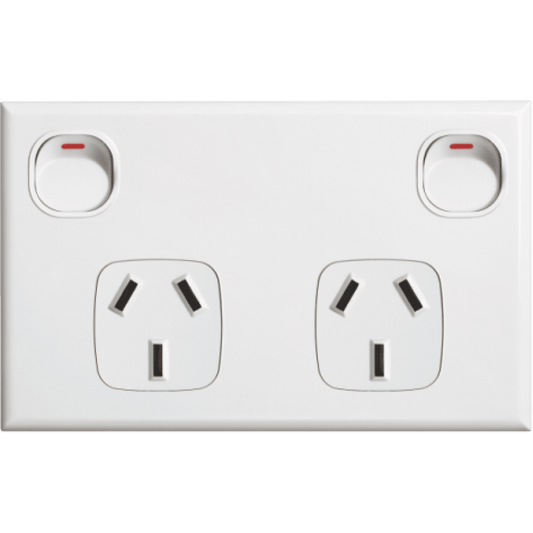
Cable, circuit protection, switches, GPOs, isolators — Clipsal, Hager, Schneider and more.
Browse the range →The rules sparkies cite most often
A handful of clauses come up over and over in trade conversations:
RCD protection on final sub-circuits (Section 2.6). AS/NZS 3000:2018 broadened the requirement so essentially every final sub-circuit in a domestic install needs 30mA RCD protection — lighting, GPOs, hot water, oven, AC, EV. Some narrow exemptions apply (life-safety circuits, specific equipment-protection cases) but for a typical home, plan on RCD coverage across the board. We've covered the device-level detail in RCD vs RCBO vs MCB.
Neutral handling (Sections 2 and 4). The neutral isn't to be switched alone. On three-phase final sub-circuits, the neutral is generally switched with the phases (hence 4P breakers and 4P RCDs). The standard sets out where switched-neutral is required and where active-only switching is acceptable.
Equipotential bonding (Section 5). Metal water pipes, gas pipes, and other extraneous conductive parts connected to the building have to be bonded to the main earth where the relevant clauses apply. This is where the metal-sink argument comes from. The actual requirement depends on the type of pipework, the location, and the rest of the installation.
Isolation and switching (Section 2.3). Every circuit needs a means of isolation. Every piece of fixed equipment needs an isolator close to it or accessible from where it's serviced. This is the one inspectors flag when an AC condenser, hot water unit, or oven doesn't have a local isolator.
Damp situations (Section 6). Bathroom zones, swimming pools, saunas — defined zones where different rules apply for IP rating, RCD coverage, equipotential bonding and equipment selection. The most common practical point: shower-zone lights have to be IP-rated for the zone they sit in.
Verification (Section 8). Testing requirements — insulation resistance, earth continuity, polarity, RCD operating times, earth fault loop impedance. Every completed install has to be tested and the results documented before the certificate is signed.
Where to buy the standard
ARCK doesn't sell AS/NZS 3000. The official sources:
- Standards Australia (standards.org.au) and SAI Global Store (infostore.saiglobal.com) sell printed and PDF copies of the current edition
- Subscription services (Techstreet, SAI Global subscriptions) provide online access with automatic amendment updates
- Many TAFEs and electrical training providers bundle a copy with their courses
- Your state regulator's website often lists the relevant standards by name and edition
Costs vary — the printed standard runs into hundreds of dollars and amendments are extra. Subscription access is usually annual.
A note: counterfeit and out-of-date copies float around online for free. Don't rely on them.
The standard updates, and the version you're working to has to be the current one with all amendments — anything else puts your work and your licence at risk.
Standards that work alongside AS/NZS 3000
Three other standards come up regularly:
- AS/NZS 3008.1.1 — cable selection (current carrying capacity tables, voltage drop tables)
- AS/NZS 5000.1 — cable construction for fixed-building wire (the standard TPS and orange circular cables are built to)
- AS/NZS 3017 — testing procedures (referenced from AS/NZS 3000 Section 8)
The wiring rules tell you what to do; these tell you how to size and test the components you're working with.
Compliance note
Electrical work in Australia must be carried out by a licensed electrician under AS/NZS 3000. This article summarises the structure of the standard — it isn't a substitute for the standard itself.
For the actual rule that applies to the job in front of you, go to the current edition.
Order from ARCK
We stock the components — cable, circuit protection, switches, GPOs, lighting, isolators, surge protection — that AS/NZS 3000-compliant installs are built from. Clipsal, Hager, Connected Switchgear, NHP, 3A Lighting, Mercator and more, on the shelf at North Parramatta.
Browse circuit protection, cable, and switches, or call the counter on (02) 9890 9693 for stock checks and trade pricing. Mon–Fri 6:30am–5pm, Sat 7:30am–1pm.
If you need the standard itself, Standards Australia or SAI Global is the place — we'll point you to the right component for the rule, not the rulebook.